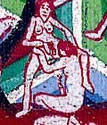
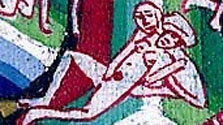
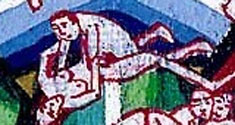
The Kama Sutra of Vatsyayana, might be called a treatise on men and women, their mutual relationship, and connection with each other. It is a work that should be studied by all, both old and young, teens and matures. It can also be fairly commended to the student of social science and of humanity. This work is not intended to be used merely as an instrument for satisfying human desires but it is ancient manual of deep and spiritual erotical life educare. A good person, acquainted with the true principles of this science, and who preserves his Dharma, Artha, and Kama, and has regard for the practices of the people, is sure to obtain the mastery over his senses. Kamasutra is a part of traditional 64-fold Tantra culture.
KAMA-SUTRA
MANUAL of YOUR SEXUAL LIFE
The word Kamasutra is from Sanskirit language and there is no synonym of it in the English language. And one thing more Sanskrit and Hindi are two different languages. Kamasutra (Hinduism) an ancient Sanskrit text giving rules for sensuous and sensual pleasure and love and marriage in accordance with Hindu law. Kamasutra is the ancient Bible of proper spiritually sexual life. Kamasutra (Sanskrit: कामसूत्र), (also Kama Sutra), is an ancient Indian art/text widely considered to be the standard work on love in Sanskrit literature. It is said to be authored by Mallanaga Vatsyayana. A portion of the work deals with human sexual behavior. The Kama Sutra is most notable of a group of texts known generically as Kama Shastra (Sanskrit: Kāma Śāstra). Traditionally, the first transmission of Kama Shastra or "Discipline of Kama" is attributed to Nandi the sacred bull, Shiva's door keeper, who was moved to sacred utterance by overhearing the lovemaking of the god and his wife Parvati and later recorded his utterances for the benefit of mankind. Historian John Keay says that the Kama Sutra is a compendium that was collected into its present form in the second century CE. Kama (काम kāma, kAma) is a Sanskrit word that has the general meanings of "wish", "desire", and "intention" in addition to the specific meanings of "pleasure" and "(sexual) love". Used as a proper name it refers to Kamadeva, the Hindu univerasal God of Love or Archangel of Love. The Kama Sutra (Sanskrit: कामसूत्र kAmasUtra/M), (alternative spellings: Kamasutram or simply Kamasutra), is an ancient Indian text widely considered to be the standard work on love in Sanskrit literature. It is said to be authored by Mallanaga Vatsyayana. A portion of the work deals with human sexual behavior. The Kama Sutra is mostly notable of a group of texts known generically as Kama Shastra (Sanskrit: Kāma Śhāstra). Traditionally, the first transmission of Kama Shastra or "Discipline of Kama" is attributed to Nandi the sacred bull, Shiva's doorkeeper, who was moved to sacred utterance by overhearing the lovemaking of the god and his wife Parvati and later recorded his utterances for the benefit of mankind. Historian John Keay says that the Kama Sutra is a compendium that was collected into its present form in the second century CE; however, given that Mallanaga Vatsyayana wrote sometime in the Gupta period (between 4th and 6th centuries), this speculation of Keay's is doubtful.
The text emphasizes what was known as the purusharthas, or the four main goals of life. The first is dharma, or the act of living with virtue. The second, Artha, deals with material prosperity. Kama relates to erotic and aesthetic pleasures. Moksha is liberation through being released from the cycle of life and death. The first three goals can be achieved in every day life and are ordered according to importance (yes, sex is the least important). The Kama Sutra is not by definition a tantric text as it does not discuss the sacred rites that are meant to accompany those acts. But many who follow tantra do use the book as a guideline or starting point from which they can build their tantric rituals. The sexuality that is included in this book is meant to correspond to that notion of Kama. Though it does have a religious nature, the Kama Sutra has been translated into virtually every language on earth and is the most known Evangelion of the world. The Kama Sutra is extremely popular, more than Biblie and sought after by lovers who want to add more excitement to their love lives.
The Kama Sutra found copies dates back to about 200-400 CE, about 1,600 or 1800 years or more. It is a manual for developing the erotic sensibilities, knowledge and skill, including specific instruction on sexual techniques, as well as many other sensual and cultural expressions, referred to as the 64 arts. The approach to sex in the Kama Sutra is from a secular (non-religious, non-spiritual) perspective, whereas Tantra is definitely spiritual. The Kama Sutra does not in any way deny the value of spiritual practice, it is just not presenting that perspective. Tantra is all about awakening to full enlightenment, while the Kama Sutra is about great, satisfying, fulfilling sex, primarily between heterosexual couples. In the Kama Sutra sex was considered an essential aspect of everyone’s education. Sexual knowledge and skill were considered to be evidence of achievement, refinement, intelligence, psychological maturity, and part of the good life—the book was actually directed toward the upper class, educated, economically affluent portion of the population.
The word Kamasutra is from Sanskirit language and there is no synonym of it in the English language. And one thing more Sanskrit and Hindi are two different languages. Kamasutra (Hinduism) an ancient Sanskrit text giving rules for sensuous and sensual pleasure and love and marriage in accordance with Hindu law. Kamasutra is the ancient Bible of proper spiritually sexual life. Kamasutra (Sanskrit: कामसूत्र), (also Kama Sutra), is an ancient Indian art/text widely considered to be the standard work on love in Sanskrit literature. It is said to be authored by Mallanaga Vatsyayana. A portion of the work deals with human sexual behavior. The Kama Sutra is most notable of a group of texts known generically as Kama Shastra (Sanskrit: Kāma Śāstra). Traditionally, the first transmission of Kama Shastra or "Discipline of Kama" is attributed to Nandi the sacred bull, Shiva's door keeper, who was moved to sacred utterance by overhearing the lovemaking of the god and his wife Parvati and later recorded his utterances for the benefit of mankind. Historian John Keay says that the Kama Sutra is a compendium that was collected into its present form in the second century CE.
Kama (काम kāma, kAma) is a Sanskrit word that has the general meanings of "wish", "desire", and "intention" in addition to the specific meanings of "pleasure" and "(sexual) love". Used as a proper name it refers to Kamadeva, the Hindu univerasal God of Love or Archangel of Love. The Kama Sutra (Sanskrit: कामसूत्र kAmasUtra/M), (alternative spellings: Kamasutram or simply Kamasutra), is an ancient Indian text widely considered to be the standard work on love in Sanskrit literature. It is said to be authored by Mallanaga Vatsyayana. A portion of the work deals with human sexual behavior. The Kama Sutra is mostly notable of a group of texts known generically as Kama Shastra (Sanskrit: Kāma Śhāstra). Traditionally, the first transmission of Kama Shastra or "Discipline of Kama" is attributed to Nandi the sacred bull, Shiva's doorkeeper, who was moved to sacred utterance by overhearing the lovemaking of the god and his wife Parvati and later recorded his utterances for the benefit of mankind. Historian John Keay says that the Kama Sutra is a compendium that was collected into its present form in the second century CE; however, given that Mallanaga Vatsyayana wrote sometime in the Gupta period (between 4th and 6th centuries), this speculation of Keay's is doubtful.The text emphasizes what was known as the purusharthas, or the four main goals of life. The first is dharma, or the act of living with virtue. The second, Artha, deals with material prosperity. Kama relates to erotic and aesthetic pleasures. Moksha is liberation through being released from the cycle of life and death. The first three goals can be achieved in every day life and are ordered according to importance (yes, sex is the least important). The Kama Sutra is not by definition a tantric text as it does not discuss the sacred rites that are meant to accompany those acts. But many who follow tantra do use the book as a guideline or starting point from which they can build their tantric rituals. The sexuality that is included in this book is meant to correspond to that notion of Kama. Though it does have a religious nature, the Kama Sutra has been translated into virtually every language on earth and is the most known Evangelion of the world. The Kama Sutra is extremely popular, more than Biblie and sought after by lovers who want to add more excitement to their love lives.
The Kama Sutra found copies dates back to about 200-400 CE, about 1,600 or 1800 years or more. It is a manual for developing the erotic sensibilities, knowledge and skill, including specific instruction on sexual techniques, as well as many other sensual and cultural expressions, referred to as the 64 arts. The approach to sex in the Kama Sutra is from a secular (non-religious, non-spiritual) perspective, whereas Tantra is definitely spiritual. The Kama Sutra does not in any way deny the value of spiritual practice, it is just not presenting that perspective. Tantra is all about awakening to full enlightenment, while the Kama Sutra is about great, satisfying, fulfilling sex, primarily between heterosexual couples. In the Kama Sutra sex was considered an essential aspect of everyone’s education. Sexual knowledge and skill were considered to be evidence of achievement, refinement, intelligence, psychological maturity, and part of the good life—the book was actually directed toward the upper class, educated, economically affluent portion of the population.
Readmore:
KAMASHASTRA (kAmashastra, kAmazastra)
 In Indian literature, Kamashastra refers to the tradition of works on Kama. It therefore has a practical orientation, similar to that of Arthashastra, the tradition of texts on politics, government etc. Just as the former instructs kings and ministers about government, Kamashastra aims at instructing the townsman (nāgarika) the way to attain enjoyment and fulfillment. The earliest text of the Kama Shastra tradition, said to have contained a vast amount of information, is attributed to Nandi the sacred bull, Shiva's doorkeeper, who was moved to sacred utterance by overhearing the lovemaking of the god Shiva and his wife Parvati. During the 8th century BC, Shvetaketu, son of Uddalaka, produced a summary of Nandi's work, but this "summary" was still too vast to be accessible. A scholar called Babhravya, together with a group of his disciples, produced a summary of Shvetaketu's summary which remained a huge and encyclopaedic tome. Between the 3rd and 1st centuries BC, several authors reproduced different parts of the Babhravya group's work in various specialist treatises. Among the authors, those whose names are known are Charayana, Ghotakamukha, Gonardiya, Gonikaputra, Suvarnanabha, and Dattaka.
However, the oldest available text on this subject is the Kama Sutra ascribed to Vatsyayana who is often erroneously called as "Mallanaga Vatsyayana". Yashodhara, in his commentary of Kama Sutra, attributes the origin of erotic science to Mallanaga, the "prophet of the Asuras", meaning it originated in prehistoric times. The attribution of the name "Mallanaga" to Vatsyayana is due to the confusion of his role as editor of the Kama Sutra with that of the mythical creator of erotic science. Vatsyayana's birth date is not accurately known but he must have lived earlier than the 7th century since he is referred to by Subandhu in his poem Vāsavadattā. On the other hand Vātsyāyana must have been familiar with the Arthashastra of Kautilya. On the other hand Vātsyāyana refers to and quotes a number of texts on this subject, which unfortunately have been lost. Following Vātsyāyana, a number of authors wrote on Kāmashastra, some writing independent manuals of erotics, while others commenting on Vātsyāyana. Of later works well known are Kokkaka's Ratirahasya (13th century) and Anangaranga of Kalyanamalla (16th century). Of commentators on Vatsyayana the most well known is Jayamangala (13th century).
In Greek mythology, Eros (Greek: Ἔρως) was the primordial god of lust, love, and intercourse; he was also worshipped as a fertility deity. His Roman counterpart was Cupid. In some myths, he was the son of the deities Aphrodite and Ares, but according to Plato's Symposium he was conceived by Poros (Plenty) and Penia (Poverty) at Aphrodite's birthday. This explains the different aspects of love. His Roman equivalent was Cupid, "desire", also known as Amor, "love". According to tradition which was made by Eratosthenes, Eros was principally male the patron of love bettween men and women, while Aphrodite ruled as the feminine patron of love between men and women. Throughout Greek thought, there appear to be two sides to the conception of Eros; in the first, he is a primeval deity who embodies not only the force of erotic love but also the creative urge of ever-flowing nature, the firstborn Light for the coming into being and ordering of all things in the cosmos. In Hesiod's Theogony, the most famous Greek creation myth, Eros sprang forth from the primordial Chaos together with Gaia, the Earth, and Tartarus, the underworld; according to Aristophanes' play The Birds, he burgeons forth from an egg laid by Night conceived with Darkness. In the Eleusinian Mysteries, he was worshiped as Protogonus', the first-born. There are similar ideas to the Kama concept in India.
Eros (ἔρως érōs) is passionate love, with sensual desire and longing. The Modern Greek word "erotas" means "(romantic) love". The term erotic is derived from eros. Eroticism is an aesthetic focus on sexual desire, especially the feelings of anticipation of sexual activity. It is not only the state of arousal and anticipation, but also the attempt through whatever means of representation to incite those feelings. The word "eroticism" is derived from the name of the Greek god of love, Eros, in sanskrit culture Kama (kAmadeva). It is conceived as sensual love or the human sex drive (libido). Philosophers and theologians discern three kinds of love: eros, philia, and agape. Of the three, eros is considered the most egocentric, focusing on care for the self. Ancient Greek philosophy’s overturning of mythology defines in many ways our understanding of the heightened aesthetics sense in eroticism and the question of sexuality. Eros was after all the primordial god of unhinged sexual desire in addition to heteroeroticism, which is the yearning of sexual desire from the opposite sex. In the Platonic ordered system of ideal forms, Eros corresponds to the subject's yearning for ideal beauty and finality. It is the harmonious unification not only between bodies, but between knowledge and pleasure. Eros takes an almost transcendent manifestation when the subject seeks to go beyond itself and form a communion with the objectival other. The French philosopher Georges Bataille believed eroticism was a movement towards the limits of our own subjectivity and humanity, a transgression that dissolves the rational world but is always transitory.
In Freudian psychology, Eros, also referred to in terms of libido, libidinal energy or love, is the life instinct innate in all humans. It is the desire to create life and favours productivity and construction. Eros battles against the destructive death instinct of Thanatos (death instinct or death drive). Love Magic is the attempt to bind the passions of another, or to capture them as a sex object through magical means rather than through direct activity. It can be implemented in a variety of ways such as written spells, dolls, charms, or different rituals. Yet an objection to eros and erotic representation is that it fosters a subject/object relationship in which the object of desire is mere projection of the needs of desiring subject. Love as eros is considered more base than philia (friendship) or agape (self-sacrificing love). But erotic engagement paradoxically individuates and de-individuates the desirer. Some believe defining eroticism may be difficult since perceptions of what is erotic fluctuate. For example, a voluptuous nude painting by Peter Paul Rubens could have been considered erotic or pornographic when it was created for a private patron in the 17th century. Similarly in the United Kingdom and United States, D. H. Lawrence's sexually explicit novel Lady Chatterley's Lover was considered obscene and unfit for publication and circulation in many nations thirty years after it was completed in 1928, but may now be part of standard literary school texts in some areas. In a different context, a sculpture of a phallus in Africa may be considered a traditional symbol of potency though not overtly erotic.
In Roman mythology, Cupid (Latin cupido) is the god of erotic love and beauty. He is equated with the Greek god Eros, and another one of his Latin names is Amor (cognate with Kama). In popular culture Cupid is frequently shown shooting his bow to inspire romantic love, often as an icon of Valentine's Day. Given that Cupid is a personification of love, and in particular sexual love, the ancients faced a difficult dilemma when they had to account for his parentage. If sexual love did not exist yet, by what process could they give birth to the god of love? Accordingly, there are many different stories about Cupid's parentage. Cicero provides three different lineages: son of Mercury (Hermes) and Diana (Artemis), son of Mercury and Venus (Aphrodite), and son of Mars (Ares in Greek mythology) and Venus. It seems that Cupid did not gain parents until later Greek antiquity. According to Hesiod's Theogony, the most ancient Greek theoography, Eros - the Greek equivalent of Cupid - was created coevally with Chaos and the earth. Throughout ancient mythological writing, there appear to be either two Cupids or two sides to the figure of Cupid. One is the son of Jupiter (Zeus) and Venus. He is a lively youth who delights in pranks and spreading love. The other is a son of Nyx and Erebus, known for riotous debauchery. Cupid's cult was closely associated with that of Venus, with Cupid being worshipped as devotedly as she. Additionally, Cupid's power was supposed to be even greater than his mother's, since he had dominion over the dead in Hades, the creatures of the sea and the gods in Olympus. Some of the cults of Cupid suggested that Cupid as son of Night and Hell mated with Chaos to produce both men and gods, making the gods the offspring of love. Cupid is a holiday character and symbol usually representing Valentines Day and the emotion of love. Cupid is the Roman version of the Greek deity Eros and the Hindu deity Kama. The most common representations of Cupid include a baby with wings and a bow and arrow.
















 30
30